OpenClaw vs. Claude Code vs. ChatGPT: Which AI Setup Is Actually Right for You?
Three tools. All powered by capable underlying models. Completely different experiences in practice. If you've spent any time trying to figure out whether to use ChatGPT, Claude, or OpenClaw — and whether Claude Cowork changes the picture — this is the breakdown that will make the decision obvious.
The short version: these tools aren't really competing. They're solving different problems. The confusion comes from the fact that they all involve chatting with an AI, which makes them look the same from the outside. Under the hood, they're architecturally different in ways that matter.
The Core Architecture Difference
ChatGPT: The Cloud Brain
ChatGPT lives entirely in the cloud. You open a browser, you type, you get a response. That's the fundamental model, and everything else — memory, web search, tools — has been layered on top over time.
It's genuinely impressive how far ChatGPT has come from a plain chat interface. But the core paradigm hasn't changed: you go to it. It doesn't come to you. It reacts when you speak and does nothing when you don't.
For most people who want to "try AI," ChatGPT is the right starting point. Zero setup, instant access, mobile app that works. But once you want your AI to operate rather than just respond, you hit its ceiling quickly.
Claude Code: Local Power, Developer DNA
Claude Code represents the next architectural shift. Instead of living in the cloud, it runs locally on your machine. That distinction unlocks something important: Claude Code can read and write files directly on your computer without you uploading anything.
This is why it became the dominant tool for serious developers so quickly. If you're working with a large codebase — thousands of files, complex dependencies — you can't upload that to a cloud chat tool every time you need help. Having the AI run locally, with direct file access, changes everything.
Claude Code also has more flexible tool use than ChatGPT. You can configure which tools it has access to, connect it to MCPs (external services), and give it a defined context that persists across a project.
Claude Cowork is essentially Claude Code with a better interface for people who aren't developers. Anthropic recognized that Claude Code was powerful but intimidating, so they built a cleaner desktop UI on top of the same engine. The underlying capabilities are the same — it's the wrapper that's different.
OpenClaw: The Personal Agent Layer
OpenClaw is also local, like Claude Code, but adds something neither of the others has: a communication layer and proactive operation.
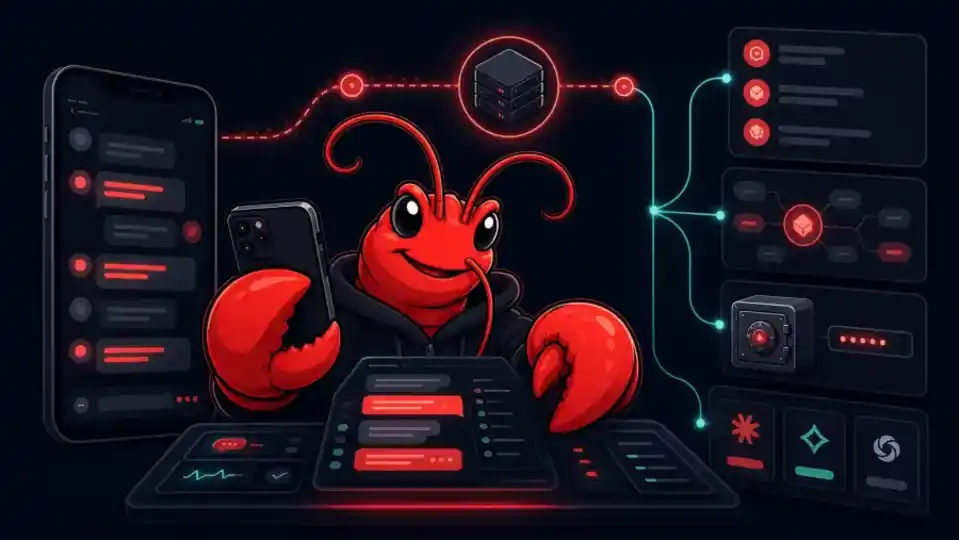
The communication layer means you can talk to your OpenClaw from Telegram, WhatsApp, Slack, or any other messaging app you already use. You don't have to open a dedicated app or browser tab. Your agent lives in the places you already live.
The proactive operation is even more significant. OpenClaw has a heartbeat — a file that runs every 30 minutes automatically. Your agent is doing things whether or not you're talking to it. It can check your calendar, save memory, run health checks on its scheduled tasks, and execute automations on a timer.
It also has native cron job support, meaning you can schedule specific tasks to run at specific times. "Every Monday at 9am, summarize my content analytics and send them to my Telegram." That runs automatically, indefinitely, without you asking for it.
Where Claude Cowork and Dispatch Fit In
Anthropic has been adding features to close the gap with OpenClaw. Claude Cowork brought local file access and a clean UI to non-developers. Dispatch — released as a research preview in early 2026 — adds persistent sessions and mobile access: you can message your Cowork agent from your phone and come back to finish work on your desktop.
The honest assessment is that Anthropic is playing catch-up. They saw OpenClaw take off (250,000 GitHub stars in 60 days, the fastest-growing software project in history) and began building equivalent features. Dispatch is their answer to OpenClaw's Telegram integration.
The gap is narrowing, but it's still real. OpenClaw has a heartbeat, native cron scheduling, a growing skill marketplace, and a community of thousands of builders adding functionality every week. Cowork is a polished product with a better out-of-box experience but fewer proactive capabilities.
The Linux vs. Windows Analogy
The clearest way to think about the OpenClaw vs. proprietary tools question is Linux vs. Windows. OpenClaw is open source. Anyone can contribute to it, extend it, and build on top of it. The community moves faster than any single company's engineering team.
Anthropic, OpenAI, and the other major players will build their own agent products that get closer and closer to OpenClaw over time. But OpenClaw will always be more extensible, more customizable, and more rapidly evolving because it has the backing of the open source community rather than a single product roadmap.
The Real Decision Framework
Use ChatGPT if: You're new to AI, want zero setup, and need quick answers, drafts, and one-off tasks. The $20/month Plus subscription is excellent value for casual to moderate use.
Use Claude (via claude.ai or Cowork) if: You need the best output quality for nuanced writing, analysis, or reasoning. Claude is widely regarded as the strongest model for long-form intellectual work. Cowork extends this to local file work.
Use OpenClaw if: You're ready to invest a few hours in setup and you have recurring workflows you want automated. You want your agent to be proactive. You want to access it from your phone. You want it to remember your life and improve over time.
Use all three if: You're serious about this. Run OpenClaw with an OpenAI primary model and Claude as a backup, both connected via OAuth for ~$40/month total. You get the best of all three with maximum redundancy.
What's Coming
The pace of development in this space is extraordinary. Every few weeks, Anthropic adds a feature to Cowork that OpenClaw already had. OpenAI is building its own agent infrastructure. NVIDIA launched NemoClaw at GTC 2026.
In 18–24 months, the feature gap between OpenClaw and the proprietary alternatives will probably be small. The reason to use OpenClaw now, beyond the current capability advantage, is that the longer you use it, the better it knows you. Memory, patterns, preferences, built-up context — these compound. Getting ahead now means you'll have a significantly more calibrated agent than someone who starts in two years.
Bottom Line
ChatGPT is where most people start. Claude is where thoughtful work gets done. OpenClaw is where leverage lives. The best AI setup is the one you'll actually use every day — but if you're ready to put in the setup time, the return is disproportionate.
Based on a conversation with Moritz Kram on the Startup Ideas podcast.