Anthropic Bans Claude Subscriptions from OpenClaw: What Happened, Full Timeline, and What Comes Next

Published: April 4, 2026 Category: AI Industry Analysis Reading time: 7 minutes
On April 4, 2026, Anthropic announced that Claude Pro and Claude Max subscribers can no longer use their subscription to power third-party agent tools like OpenClaw. The decision immediately triggered a wave of developer backlash, positioned OpenAI and open-source alternatives as direct beneficiaries, and reignited a long-running debate about who actually controls access to AI inference.
This is the full story: what Anthropic did, why, how the community responded, and what you should do if your stack depends on Claude.
Table of Contents
- What Anthropic Actually Announced
- Full Timeline of Events
- Why Anthropic Made This Decision
- How OpenClaw Works and Why It Conflicted with Claude Subscriptions
- Community Reaction: Developers, OpenAI, and Open Source
- Workarounds: How to Keep Using Claude with OpenClaw
- Alternatives to Claude for OpenClaw: OpenAI, Ollama, Local Models
- What This Means for the AI Tools Ecosystem
- What to Expect Next

What Anthropic Actually Announced
Anthropic has not banned OpenClaw. The distinction matters. What changed is that Claude Pro ($20/month) and Claude Max (up to $200/month) subscriptions no longer cover usage routed through third-party tools like OpenClaw, Cursor, and similar agent harnesses.
You can still use OpenClaw with Claude in two ways:
- Via the Claude API with a pay-as-you-go or prepaid bundle
- Via extra usage bundles now available at a discount from Anthropic
The Verge ran the story under the headline "Anthropic essentially bans OpenClaw from Claude by making subscribers pay extra" — technically accurate, directionally polarizing. Community notes on X quickly added context: it is a subscription exclusion, not a product ban. The distinction matters legally and practically, but for a developer who just watched their workflow break mid-sprint, it felt like a ban.
The subscription products, by Anthropic's framing, are designed and priced for Claude Code and Claude Desktop. Agent loop workloads from third-party tools fall outside that scope going forward.
Full Timeline of Events
Before April 3, 2026
OpenClaw founders Peter Steinberger and Dave Morin enter negotiations with Anthropic in an attempt to preserve subscription access. By Steinberger's own account on X, the best outcome they secured was a one-week delay to the enforcement date.
"woke up and my mentions are full of these. Both me and @davemorin tried to talk sense into Anthropic, best we managed was delaying this for a week. Funny how timings match up, first they copy some popular features into their closed harness, then they lock out open source."
— Peter Steinberger (@steipete), April 4, 2026
That detail — a one-week delay being the best Steinberger could negotiate — tells you something about the firmness of the decision on Anthropic's side. This was not ambiguous internal debate. It was settled, and the founders of OpenClaw were given just enough runway to prepare their community.
April 3, 2026, evening
Boris Cherny, Claude Code lead at Anthropic, posts the official announcement on X: starting April 4 at 12pm PT, Claude subscriptions will no longer cover usage on third-party tools including OpenClaw.
Simultaneously, Cherny opens pull requests to improve prompt cache efficiency for OpenClaw specifically, reducing API costs for users who shift to the pay-as-you-go model. He frames this as a personal gesture to soften the transition — a move that received both appreciation and skepticism from developers who saw it as Anthropic having things both ways.
April 4, 2026, morning
An email goes out to every Claude subscriber and Discord member. Jeff J Hunter shared it publicly on X:
"Anthropic just sent this email to every Claude subscriber & discord member. Starting today, April 4th at 12pm PT, your Claude subscription no longer covers OpenClaw usage. You can still use Claude through OpenClaw. But now it's pay-as-you-go. Billed separately. On top of your [subscription]."
— Jeff J Hunter (@jhunter101), April 4, 2026
Developer sentiment on X turns sharply negative. Key data points from the thread:
- One developer reports spending $400 to $500 in API overages in under a week, then migrating to Grok 4 where equivalent usage cost under $20
- The Verge publishes its summary
- X community notes add context clarifying it is a subscription exclusion, not a full block
- Sentiment shifts quickly against Anthropic in builder communities, which had previously been among Claude's strongest advocates
Armin Ronacher (creator of Flask, among other widely-used dev tools) captured the communication problem precisely:
"I feel sorry for the Twitter active Anthropic folks who constantly have to do the messaging, because apparently Anthropic has no other channel to communicate stuff like this :P"
— Armin Ronacher (@mitsuhiko), April 4, 2026
The comment has 256 likes and 26K views — not because it's cruel, but because it's accurate. The entire public-facing response was handled via X threads from individual engineers. No blog post. No announcement page. No support article. For a company with Anthropic's profile and enterprise ambitions, the lack of official communications infrastructure was striking.
April 4, 2026, midday
Cherny confirms Anthropic will issue full refunds to affected subscribers, plus discounts on prepaid API bundles. An email with refund links will go out the following day. He also clarifies there are no plans to ban accounts that continue using OpenClaw during the transition period.
April 4, 2026, afternoon
Ollama announces publicly that their cloud tier supports OpenClaw natively, with open models including Kimi K2.5 and GLM-5 accessible starting at $20 per month. Developer migration begins immediately.
"Ollama's cloud is one of the best places to run OpenClaw. $20 plan is enough for most day to day OpenClaw usage with open models! To make the switch, all you need is to open the terminal and type:
ollama launch openclaw"— ollama (@ollama), April 4, 2026 — 285K views, 2,439 likes
The timing of that announcement — within hours of the Anthropic news, with a ready-made terminal command — was not an accident. Ollama was prepared. The repost from Steinberger amplified it massively.
Y Combinator's Garry Tan weighs in:
"Anthropic shutting down OpenClaw may turn out to be a strategic blunder, or strategic genius. The OpenClaw community will be the determiner of whether it is A or B. It's an interesting moment in history. Personally I never bet against open source."
— Garry Tan (@garrytan), April 4, 2026 — 1,001 likes, 67K views
Later in the day, Tan walked it back slightly after pushback, clarifying that OpenClaw is not "shut down" in any technical sense — but held the broader point:
"Internet: Would you please give me some grace? I am just vibe tweeting over here. OpenClaw is not 'shut down' but for all intents and purposes many people are going to have to switch off Anthropic models even though they spend $200 for Max plans."
— Garry Tan (@garrytan), April 4, 2026
The steipete bombshell: he's joining OpenAI
Perhaps the most significant development — pinned to Steinberger's own profile — predates this incident but reframes it:
"I'm joining @OpenAI to bring agents to everyone. @OpenClaw is becoming a foundation: open, independent, and just getting started."
— Peter Steinberger (@steipete), February 15, 2026 — 5.6M views, 41K likes
Steinberger is joining OpenAI. OpenClaw is being handed to the community as an open foundation. This means the Anthropic decision did not just cost Claude a power user community — it happened at the exact moment the founder of OpenClaw was already moving to the competition. The timing compounds everything.
Why Anthropic Made This Decision
The official explanation from Boris Cherny centers on infrastructure optimization, not revenue maximization. Claude's systems are engineered around specific usage patterns — primarily human-paced, turn-by-turn conversation as found in Claude Code and Claude Desktop. OpenClaw and similar tools generate continuous agent loops with fundamentally different load characteristics, creating strain on systems not designed for that workload.
The analogy that spread rapidly across developer communities: the gym membership model. Anthropic priced subscriptions assuming a distribution of usage intensity across its subscriber base. OpenClaw power users were effectively going to the gym multiple times every day and using every machine at full capacity. The math stops working.
This reasoning is technically credible. It is also commercially convenient, which is why many developers did not accept it at face value.
The timing detail that generated the most suspicion: the enforcement date landed within days of Anthropic shipping native agent features into Claude Code and its new Cowork desktop tool. Critics argued the sequence was deliberate — absorb the use cases that made OpenClaw popular, then cut off the subsidized access that made OpenClaw affordable.
Cherny did not directly address the timing criticism.
How OpenClaw Works and Why It Conflicted with Claude Subscriptions
OpenClaw is an AI agent framework that allows users to build persistent, multi-step workflows powered by large language models. It supports file access, browser automation, scheduled tasks, email handling, and coding tasks — all orchestrated through agent loops that can run continuously in the background.
The conflict with Claude subscriptions came down to a single architectural mismatch. Claude's subscription infrastructure is designed for interactive, human-in-the-loop sessions. OpenClaw runs automated pipelines that can generate thousands of API calls per day without any human interaction between calls. The token volume per active user was orders of magnitude higher than what the subscription pricing model assumed.
For a $200 per month Claude Max subscriber running OpenClaw automations around the clock, the actual compute cost to Anthropic could easily exceed the subscription revenue by a factor of five or more.
A developer sharing their own cost data on X put it simply: they had been running agentic tasks at $400-500 per week while paying $200 per month. For Anthropic, that math was clearly unsustainable at scale.
Community Reaction: Developers, OpenAI, and Open Source
The community split predictably along pragmatist and idealist lines.
Pragmatists argued the economics were always untenable. Automated agent workloads belong on the API. The subscription was never designed or priced to support thousands of daily calls per user. Max Harlow (@MaxHarlow_) put it bluntly on X:
"Anthropic pulling Claude subscription access from third-party tools like OpenClaw isn't an attack — it's a business model clarification. Subscription revenue is for consumers. API revenue is for builders. The builders who didn't plan for this just learned an expensive lesson."
— Max Harlow (@MaxHarlow_), April 4, 2026
Ecosystem builders and open-source advocates framed it as a pattern: a platform attracts a developer community by allowing broad third-party usage, waits for that community to build dependency, then tightens access once the native product is ready. The specific move against OpenClaw — the most popular third-party Claude harness with a large and vocal community — was seen as a signal to the entire ecosystem.
Peter Steinberger was measured but clear. He credited Cherny personally for the cache efficiency work and refund commitments, while noting that Anthropic is the only major AI provider that restricts subscription usage for third-party harnesses. Every competitor, including OpenAI, explicitly permits it.
Some developers moved immediately. Ziwen (@ziwenxu_) posted publicly:
"I stopped the subscription, and also make a video about how to queue your Claude Max in Openclaw + Hermes. Just in case other people are still going to use Anthropic in their OpenClaw, but it's not a long-term solution. Everybody should know this."
— Ziwen (@ziwenxu_), April 4, 2026
OpenAI has not made a formal statement capitalizing on the situation, but the message from Codex and ChatGPT's agent infrastructure was implicit: the door is open.
Workarounds: How to Keep Using Claude with OpenClaw
Three paths exist for developers who want to continue using Claude as their model provider within OpenClaw.
Option 1: Claude API with pay-as-you-go The most stable and fully sanctioned path. Set up an Anthropic API key, route OpenClaw through it, and pay per token. With Cherny's cache efficiency improvements now live, repeated or templated prompts will cost significantly less. Best for teams with predictable, measurable workloads.
Option 2: Extra usage bundles Anthropic is offering these at a discount for users transitioning from subscription access. Effectively a prepaid token bucket that functions like the API but with more predictable billing. Best for teams that want a fixed monthly cost rather than open-ended API metering.
Option 3: CLI authentication workaround
Some community members identified a path using the Claude Code CLI as a model provider with the command models auth login --provider anthropic --method cli --set-default. This technically bypasses subscription restrictions by routing through the CLI authentication layer. Whether this remains sanctioned or gets closed is unclear at time of writing. Use at your own risk.
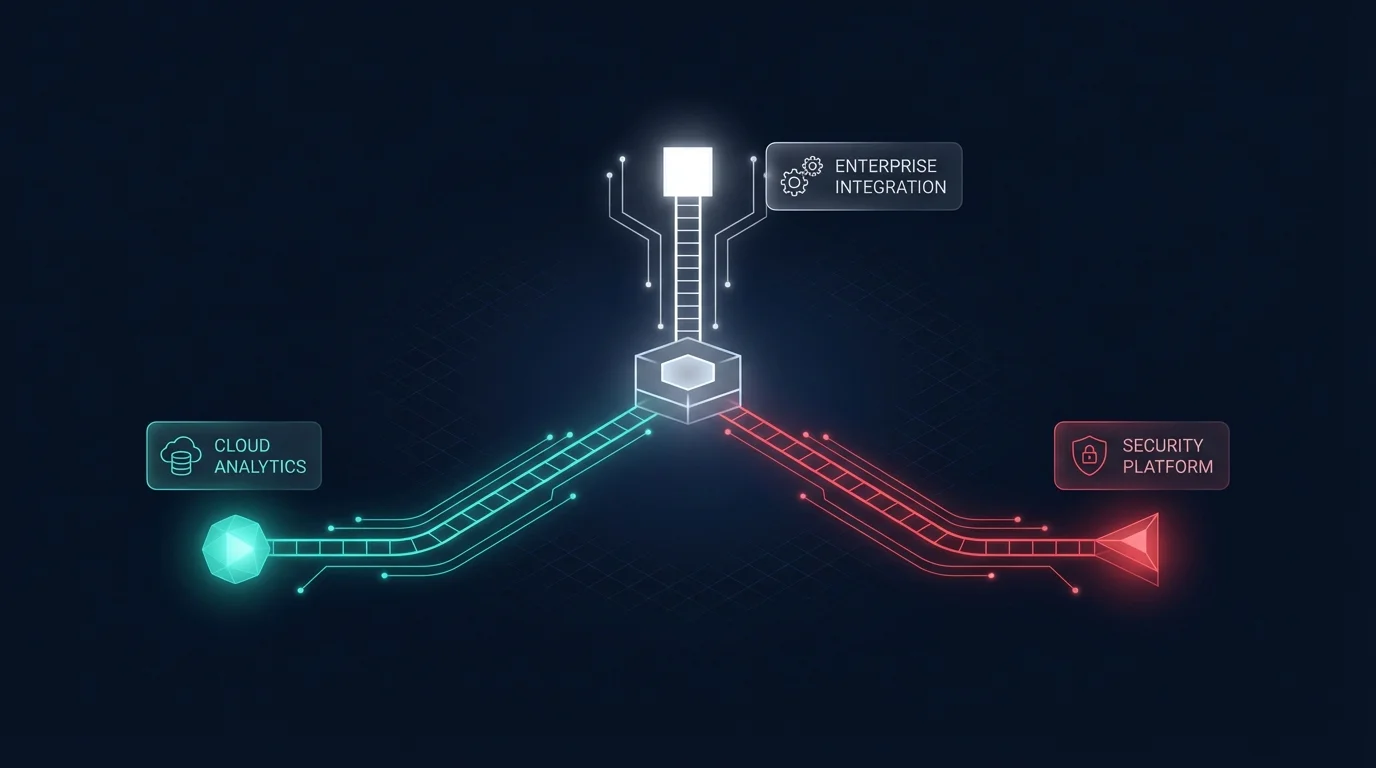
Alternatives to Claude for OpenClaw: OpenAI, Ollama, Local Models
This is where the ecosystem story gets more interesting.
OpenAI Codex
OpenAI explicitly permits subscription usage for third-party harnesses, including OpenClaw. Codex is the primary competing coding agent. Community feedback: strong on code generation, weaker on the personality, reasoning quality, and creative tasks where Claude historically dominates. For pure automation pipelines where model personality is irrelevant, Codex is a viable immediate replacement.
Ollama Cloud
Ollama positioned itself aggressively within hours of the announcement, and their timing was perfect. Their $20 cloud tier natively supports OpenClaw and offers models including:
- Kimi K2.5 (recommended for most use cases)
- GLM-5 (strong general reasoning)
- MiniMax M2.7 (cost-efficient for high-volume tasks)
For developers who were paying $200 per month for Claude Max to run OpenClaw automations, Ollama's $20 tier is a dramatic cost reduction. The tradeoff is model capability — particularly on nuanced reasoning and long-context tasks where Claude Sonnet and Opus remain class-leading.
To switch, the terminal command is as simple as:
ollama launch openclaw
Then choose a model. That kind of onboarding simplicity matters when developers are frustrated and looking for an immediate out.
Local Models via LM Studio or Ollama Local
The nuclear option, and increasingly viable. A Mac Studio M4 Ultra or a dual-Spark setup can run Qwen 3.5, Kimi K2.5, or GLM-5 at competitive quality levels for a one-time hardware investment. For a developer spending $400 per month on API overages, the hardware pays for itself in under a year.
LM Studio with MLX backend on Apple Silicon is the current recommended local inference stack. Qwen 3.5 at Q8 quantization on a 96GB unified memory machine handles the vast majority of OpenClaw workflows with no ongoing cost per token.
Grok 4
X's Grok 4 model has emerged as the lowest-cost option for high-volume agent workloads. At least one developer publicly reported switching from Anthropic (at $400 to $500 per week) to Grok 4 and spending under $20 for equivalent output. Best for tasks where throughput matters more than model quality ceiling.
What This Means for the AI Tools Ecosystem
This is not primarily a story about OpenClaw. It is a story about the fundamental tension between platform openness and commercial infrastructure economics at scale.
Every major AI provider faces the same structural problem: subscription pricing models that made sense at 100,000 users begin to break when a subset of power users deploys automated agents running 24 hours a day. The providers that figure out sustainable pricing for agent workloads will define the next phase of the market.
Anthropic's response — push heavy workloads to the API — is defensible and probably correct. The execution, with less than 24 hours of public notice and enforcement that caught developers mid-workflow, was widely criticized as poor. The fact that a company the size of Anthropic communicated a policy change of this magnitude entirely through individual X threads from one engineer says something significant about their developer relations infrastructure.
The more important question is whether Anthropic's native agent tools — Claude Code and Cowork — can actually replace what developers were building with OpenClaw. If they can, the migration noise fades within a quarter. If they cannot, Anthropic has handed a meaningful and durable opening to open-source alternatives and to every competitor that keeps the door open.
What to Expect Next
Short term (days to weeks): Refund emails go out. Developers sort into three groups: those who move to the API and stay on Claude, those who migrate to Ollama or local models, and those who abandon Claude for OpenAI or Grok. Anthropic's builder community sentiment metrics will drop measurably.
Medium term (weeks to months): The real test is whether Claude Code and Cowork close the gap with what OpenClaw offers. If Anthropic ships genuinely competitive native agent tooling, many developers will return. Peter Steinberger has indicated OpenClaw will continue development with OpenAI as the default model provider — and given that he is now inside OpenAI, the competitive dynamic is direct.
Long term (quarters to years): Local inference adoption accelerates. The developers most burned by this episode are precisely the ones most motivated to eliminate cloud API dependency. Ollama, LM Studio, and open-weight model providers like Qwen and Kimi are the structural winners of this moment, regardless of how the Anthropic-OpenClaw story resolves.
The model quality gap between frontier closed models and the best open-weight alternatives is narrowing every quarter. Anthropic's decision may have accelerated the timeline on which local inference becomes the default choice for serious developer workloads.
Garry Tan's framing was right: the OpenClaw community will be the deciding factor. If they rebuild on open-source infrastructure and keep shipping, this moment will look like the catalyst that ended closed-model lock-in for agentic workloads. If they scatter, Anthropic will have successfully absorbed the use case and the story ends quietly.
Either way, April 4, 2026 will be a date worth remembering.
Key Takeaways
- Anthropic restricted Claude Pro and Max subscriptions from covering third-party agent tool usage including OpenClaw, effective April 4, 2026
- The decision is rooted in infrastructure economics, not a ban on OpenClaw itself
- Full refunds are available for affected subscribers
- Three viable migration paths exist: the Claude API, alternative cloud models via Ollama, or local inference
- OpenAI and open-source providers are the immediate beneficiaries
- Peter Steinberger, OpenClaw's founder, is joining OpenAI — OpenClaw becomes a community-owned open foundation
- The long-term impact depends on whether Anthropic's native agent products can retain the developer ecosystem it has disrupted
Sources: X posts and threads from Peter Steinberger (@steipete), Boris Cherny (Anthropic), Garry Tan (@garrytan), Jeff J Hunter (@jhunter101), Armin Ronacher (@mitsuhiko), Max Harlow (@MaxHarlow_), Ziwen (@ziwenxu_), ollama (@ollama), The Verge. Grok live news summary on the Anthropic OpenClaw story, April 4, 2026.
Related searches: Claude API pricing 2026, OpenClaw alternatives, best AI agent tools, local LLM inference Mac, Ollama cloud review, OpenAI Codex vs Claude Code, Claude subscription changes, Anthropic pricing update